Showing posts with label Xbox 360. Show all posts

Saturday, 4 December 2010

Gaming: Do we need to get Kinect-ed?

Four years ago the Nintendo Wii broadened gamers’ horizons, getting them up off the sofa and waving their arms around to interact with games with its revolutionary motion-sensitive controls.
 
Last month Microsoft took the gaming experience a step further with the release of Kinect, an add-on to the incredibly successful Xbox 360 which lets players jump into games in a way they never have before. With a combination of an conventional RGB camera and two motion-tracking sensors, Kinect scans you into the game so every move you make is reflected on screen by your character.

The system, which is compatible with all existing Xbox 360s, was released on 10 November and sold a million units worldwide in the first 10 days after launch. Microsoft is confident to have it in five million homes worldwide by the end of the year. But with so much technology already hanging around widescreen TVs across the land, do people need another device?

There’s plenty of shiny futuristic features to the technology: voice control, hand control of the menus, as well as ‘scanning’, which means that the sensor can be shown a colour, analyse it and then use it in the game, such as the colour of your car in happy-go-lucky racer Kinect Joyride (which is obviously not a copy of any Kart-based franchise on Nintendo’s consoles…).

The camera also works as a normal webcam, allowing video chats via Xbox LIVE, but with webcams as standard for most laptops and Skype facilitating video chatting it’s hardly a unique selling point.
What Microsoft have failed to realise is that it’s the strength of the games which will sell Kinect to the masses, especially their current fanbase, and unfortunately it’s a fairly mixed bag. If things had gone according to plan we might have seen Kinect-enabled Fable III as well as Gears of War 3 but alas it was not to be. Perhaps Microsoft should invest in coming up with an IP which really lends itself to showcasing the technology…?

On top of it all it’s not cheap either – despite claims originally that it would retail around the price of a standard game – Kinect currently RRPs at £129.99 on its own, though it does come with the physically challenging Kinect Adventures, or you can pay £249.99 for a bundle with the new slim Xbox 360 console included as well.

The smart thing to do though is to wait for an established franchise to take the plunge and embrace the technology to show the world what Kinect can really achieve. In the meantime relax, gaming is supposed to be recreation after all. If you want a work out though, there is a certain console from Japan which you can flail your arms at to your hearts content, if you need a clue its name rhymes with ‘money’.

Thursday, 29 July 2010

Gaming: New Halo: Reach trailer


There may still be seven weeks to go before Bungie's final (allegedly) outing into the sci-fi adventure universe of Halo, but Microsoft are keen to rack up the anticipation factor, which is why we now have a shiny new HD trailer.

September 14 will come around quickly once the summer weather wears off and people quickly retreat inside from their barbecues to shelter in the warmth given off by the whirr of their Xbox 360s - unless you can afford a glossy black one of course.

Halo is the backbone of the Xbox legacy, so you can understand why MS are pushing it so hard, but what can we get out of this latest trailer?

With a lot of exposure for the multiplayer aspect of the game through the Beta test, this trailer focuses on the campaign mode, which will see you take command of Noble Six. No rookie this time around, unlike the slightly lacklustre ODST, this squad are hardened Spartan IIIs, but not the tough cookies Master Chief and his pals are, so things should be a little tougher this time around.

The trailer opens with the planet Reach, the fall of which is well known by veteran Halo players, suggesting the ending of the game won't be too happy. Proceedings take a distinctly Avatar-like turn as we see numerous flying transports (the pre-cursor to the Hornets seen in later games) crossing mountainous forests, so there may be levels similar to Halo 3's opening trek.

Soon Spartan troops are being briefed, including glimpses of the skull-faceplate-painted character known as 'Ghost', alongside humans, meaning the days of stealing human characters' Shotguns will soon be here again.

Next an armoured convoy with air support speeding across a sandy plain before being attacked by The Covenant, which should be exciting since the series has been aching for an out and out mass vehicle battle for years, hence the popularity of the 'Heavy' multiplayer modes in Halo 3.

The Elites rear their head as the enemies once again, but this time around you have the advantage of armour upgrades (or downgrades?) to give you a helping hand, and The Covenant forces begin to overwhelm the backgrounds just as they did in New Mombasa.

A quick glimpse of what looks like a fighter jet we'd recognise from an American war film stirs up some questions before soon revealing it's attached to a space rocket, which leads us to a Star Wars-esque space battle, but there is little time to absorb it as Bungie snatches Reach away from us again to keep us wanting more. As it should be.

With all their pedigree Bungie have every reason to make this an unforgettable title to see out the series on, with people growing tired of modern warfare once again it's time to return to sci-fi, so everyone will be too engrossed by the time Call of Duty wants to fight back.


James Michael Parry

Thursday, 22 July 2010

Gaming: Exclusive Interview with Mark Meer, Commander Shepard from Mass Effect


While many people play computer games, there's generally little thought for the voices behind our war-torn characters, until now. This Is Entertainment, in a totally original and never-before-seen stunt, has sought out one of these unsung heroes to ask them a few questions and find out some juicy game secrets.

The man in question is none other than Mark Meer, better known as the noble/dastardly Commander Shepard from Mass Effect, Mass Effect 2 and the imaginatively titled concluding episode: Mass Effect 3.

This Is Entertainment managed to catch up with him between saving the galaxy and having some herbal tea :

This Is Entertainment: How does it feel to be one of the most identifiable computer game characters of this generation?
Mark Meer:  First of all, thank-you for opening with a flattering question. I feel lucky and honoured. As a long-time collector, I'm pretty thrilled that I get my own action figure later this summer. Of course, it will really be a Mark Vanderloo action figure... he's the guy who Shepard's appearance is based on. It's also quite an honour to get to play the male version of a character Jennifer Hale is voicing - she's one of the best in the business.
TIE: Have you played the games yourself? If so, what did you think of them?

MM: I have, and they're great. I've usually seen some animatics and concept art during the recording process, but to see it all put together in gameplay always makes me pretty proud to be a part of it. As a player, the one problem for me personally is that I'm privy to many of elements of the plot, including the many alternate ways that any given situation could go. Here's two equally geeky frames of reference: it's a bit like playing through a Dungeons & Dragons module that you were Dungeon Master of a few months ago. Or like being Dr. Manhattan...except with pants. On the other hand, with something like the Dragon Age games, I can enjoy watching the plot unfold as it would normally, and then have fun slaying myself as a Werewolf or Darkspawn or what have you.

TIE: Mass Effect works on a varied morality system, if you were Shepard for real, would you be the noble hero, or the man who did whatever it takes to get the job done?

MM: Well when gaming, I tend to play ruthless on the first round, and noble on the second. It feels like I'm redeeming myself for all the poor bastards I screwed over on the first playthrough. Since there are few opportunities for a second chance at real life, I'd probably do my best to try to be noble.


TIE: There are countless dialogue choices throughout the two games, is there any line in particular which you'd class as your favourite?

MM: I could trot out "I have to go", since I say it enough. Renegade Shepard has plenty of awesomely snide/badass comments... it's hard to choose. As a side note, I had a blast doing all the Vorcha in ME2. Screaming and screeching at the top of your lungs in the soundbooth is always fun.

TIE: How did you begin to build the character of Shepard at the beginning of making ME1? Did you have a lot of room to experiment or were BioWare very clear on what they wanted word for word?

MM: To approach Shepard as a character is a bit tricky, because many of the lines you record will have to serve for both the Renegade and Paragon versions. And ultimately, the player is the one who's deciding what Shepard's personality and background are. First and foremost, Bioware wanted Shepard to be a marine - whether ruthless or noble, that's who Shepard is at his/her core. Occasionally, we'd change bits of dialogue on the fly to make it flow better or sound more natural, and when Mac (Walters – Head Writer) was sitting in on sessions, he could approve those on the spot, rather than us having to pause in recording and phone Bioware for clearance.

TIE: What's your favourite part of voice acting?

MM: I suppose it's different to other sorts of performing since there's the chance to play an incredibly wide variety of parts, including ones that you might not be cast in if the project were, say, a film or television show. Plus, you get to show up in your pyjamas and drink soothing herbal teas while you work.

TIE: What was your reaction to the controversies which were raised over the first game's adult content? Were you surprised?

MM: Baffled, really. Most of what was being said was outright fabrication, so what was really puzzling was how these people who had never played the game were speaking with such authority on its content. But ultimately, most everyone realized it had been blown completely out of proportion and that some fairly tasteful partial nudity did not equal "virtual orgasmic rape" or whatever the hell they were trying to call it. As I recall, most of the "pundits" involved sheepishly recanted within a week.

TIE: Other than Shepard, who's your favourite character in the series? And why?

MM: It's hard to choose. I'll have to go with my top three - Wrex, Tali, and Mordin. I guess I just like aliens...

TIE: According to me sources (i.e. Mr Google) you're a keen gamer. Are there any titles you are particularly enjoying playing at the moment? Or looking forward to?

MM: Currently playing Red Dead Redemption, eagerly awaiting Fallout: New Vegas, Dead Rising 2, and DC Universe Online. Naturally, I'll be eager to see the next Dragon Age and Mass Effect 3 as well.

TIE: Outside voice acting work you do improv shows, how are those going at the moment?

MM: Very well indeed. I just got back from the Los Angeles Improv Comedy Festival and the General Fools Improv Fest in Regina in time for Edmonton's own Improvaganza. A lot of comedy has been made up on the spot and a lot of beer has been consumed. While I was in L.A., some friends of mine and I did a special super-hero themed show at the Eisner Award-winning Brave New World Comics in Newhall. The show's called "The Harold of Galactus". If you know both improv and comic books, you'll find that name hilarious. Otherwise, you'll just be confused and angry.

TIE: Mass Effect 3 is due late next year and we've heard it's going to be more 'light-hearted'. For fear of danger to your family from the BioWare overseers, is there anything else you can safely tell us about the game?

MM: Two words. Chimpanzee sidekick.


James Michael Parry

Monday, 14 June 2010

Gaming: E3 Special - Microsoft Press Conference dissected

So, E3 (that's Electronic Entertainment Expo for long) has finally returned once again to bring us a week of exciting gaming announcements. Microsoft were up first at 10.30 am this morning to a slightly delayed start, but talking piece of the conference is the very sleek, slim and new Xbox 360 (that black shiny thing you're gawping at just there ->).

Before all that though, there was plenty of Xbox-related goodness to get through. If you don't fancy watching the feature-length event in full, which you can easily do online here at Gamespot.com, allow me to break down the excitement into bite-size chunks.

The event began with a immersive look at Call of Duty: Black Ops, Treyarch's stab back after the Activision/Infinity Ward fallout debacle following Modern Warfare 2. The game looks great, with all of the series' staples in place, but you can't help feeling it's more of the same. There was a nice touch though with the news that add-ons and DLC would be coming to Xbox 360 first for the next three years.

A packed Los Angeles Convention Center, or more specifically a theatre inside it, greets Senior Vice President Don Mattrick as he tells us that this year is the 10th year of Xbox and pushed home firmly the idea of making gaming simple.

Keeping up the momentum of his opening sermon, Mattrick ushers on Hideo Kojima, creator of Metal Gear Solid, to talk about the new game Metal Gear Solid: Rising. which was teasered at E3 '09. The presentation was brief but showed off the snazzy visuals and distinctly Japanese fighting style which allows you to slice through anything.

Then comes the first part of the grand plan of simplification as the retail name of Microsoft's Project Natal:  Kinect - which was announced yesterday - is casually thrown in by Phil Spencer, who becomes the audiences' guide for the rest of the conference.

He also talks about games, making the bold statement that "everything you see and hear from now on is exclusive to Xbox 360", which you feel would have packed more punch right at the start, but MGS: Rising denied them.

The first 'Xbox Exclusive' to be rolled out is the hugely anticipated Gears of War 3, which Cliff Blesinski, Project Lead at Epic Games, is over-eager (as usual) to show us. Blesinski throws out the big guns, literally, showcasing the four-player coop of Delta Team - complete with female squad members - fighting off the new Lambent-mutated Locust, including a very quick and deadly Lambent Berserker which now hops around manically. Largely it's more of the same, but when the same was as good as Gears 2 and there is SO much more, you can't help but be excited.

Next is Peter Molyneux (thankfully without Milo in tow), to show off Fable III in all of it's samey-ness, though things look a little more exciting and fast-paced than before, and the prospect of ruling an Albion moulded and shaped by your choices is an intriguing prospect.

After a random trailer for Codename Kingdoms, which resembles 300 in game form, we are treated to a visit from Marcus Lehto from Bungie to show us some in-game footage from the campaign of upcoming title Halo: Reach. At first glance the game already retains the sense of scale and wonder which Bungie have kept all the way through the series and the visuals are looking highly polished - a criticism of ODST's minor upgrade.

On top of the visual changes the Elites have returned as main enemies, leading to a fan-boy resurgence as your Noble-team Spartan-III silently assassinates one from behind, prompting a short but very satisfying animation. The scene ends with you being ejected into space amid a colourful battle, perhaps suggesting some space vehicle combat?

With the "blockbuster game" demos out the way, the second act is left for Microsoft's answer to the market-dominating Wii - Kinect (already proving to be a spelling nightmare.) What follows is a fairly drawn out series of demonstrations which range from a re-hash of what we were shown last year (Milo has become an affectionate tiger now), to genuinely interesting - if a little niche - titles.

The in-house launch games are all very avatar-heavy, with names like Kinect Sports, Kinanimals and Kinect Joy Ride, and have a very thin veil over the fact that they are ripping off Nintendo's Wii Sports (& Resort), Nintendogs and Mario Kart Wii respectively.

Luckily Harmonix turn up to save Massivesoft's bacon with the groove-busting Dance Central (think Dance Hero) showing off what the hardware can do, albeit with practised professional dancers...mostly at least. The North American launch will be November 4, but the jury will remain out until one of the 'real' games developers implements Kinect into a traditional game genre.

There was a big push for the multi-media aspect of Xbox ownership during the presentation, including a deal with ESPN to show matches free to Xbox LIVE Gold members, though no news if this will make its way out of North America.

Once the executives were happy they'd pushed their new, strangely named, add-on enough, (not before fondling the inside of a virtual Ferrari a bit) they moved on to welcome back Don Mattrick to round up everything great about Xbox, before lifting the Xbox 360 which had been sitting in the middle of the stage the whole time to reveal a smaller, shinier, blacker version beneath.

Though this was expected ever since the PS3 went slim last year, it still provoked the biggest response from the audience, and as an unexpected bonus, everyone at the conference was sent one free of charge - well done for them fending off the ash clouds to turn up maybe?

The biggest surprise was how quickly the company is shipping them out, claiming they will be available to buy later this week, and the unit includes built-in Wifi, something which surely should have been corrected already.

So, there you have it, all of the big news and excitement from the Microsoft camp. The Nintendo and Sony conferences are held tomorrow so expect the news from there in the next few days, if you haven't been beaten into the ground with tweets about it before that of course.

James Michael Parry

Monday, 7 June 2010

Gaming: Top 5 Xbox LIVE Games

Online gaming is massive, something I've touched on previously in my blog, and nowhere more so than Microsoft's Xbox LIVE, but for those of you who are yet to be bitten by the bug, yet to see your Xbox 360 reach it's full potential, I bet you're sitting there thinking: “Paying a fiver a month to play online? Why should I?”

The answer, is quality. The Xbox LIVE community thrives because of the people who make it what it is. Only last month we heard the story of players continuing to play Halo 2 after Microsoft decided to shut original Xbox LIVE down. Nowhere else would you get the same sort of devotion, except perhaps the most dedicated hardcore Counter-Strike servers.

So to initiate the unconverted, I've decided to pick out the top five games which show the best of what Xbox LIVE has to offer. While there might not be many surprises on the list, and there are many many more excellent games to be enjoyed online, these five together give the most enriching and entertaining all-round online experience.


1) Halo 3 (Developer: Bungie // Publisher: Microsoft)

So first up we have the big daddy of modern online gaming, the game that took the idea to a whole new level. By March last year over a billion matches had been played on multiplayer and it still ranks highly on the weekly Xbox LIVE play figures, reaching number three on week May 24th according to Major Nelson.

But just because a game is popular, doesn't mean it's automatically good, we all know what sheep people can be. In Halo's case though, the Bungie team have learnt from the multiplayer in Halo 2 and improved everything about the matchmaking and game types to provide as wide a range of game types and general destruction as possible.

Standard deathmatches are all well and good, but fancy driving around the map with explosions everywhere from infinite ammo rocket launchers? Well you can thanks to the 'Rocket Race' gametype – although it is rare to come across these days – as well as the more traditional 'King of the Hill', 'Gladiator' and 'Team Swords' all being hugely enjoyable modes.

Another feature which in many ways was underused is the infinitely customisable 'Forge' mode, in which players can customise any of the maps in the game with additional crates, explosives, weapons, vehicles, practically anything in fact, leading to some inspired custom levels. The latest DLC pack 'Mythic' – released with Halo ODST – included a map called 'Sandbox' with large areas above and below the actual map for exactly this reason, sadly Bungie made little effort to introduce the best custom levels to the rest of the community and so the level failed to fulfil its potential.

Despite that Halo continues to be consistently fun to play despite being released in 2007, and the generally team-based play means the learning curve isn't too steep.


2) Battlefield: Bad Company 2 (Developer: DICE // Publisher: EA)

While many of you at this moment are no doubt incensed with anger at me choosing this game in place of the astronomically successful Call of Duty: Modern Warfare series.

The reasons this game tops it for me are two fold: firstly – Modern Warfare is hard. Now I've no problem with things being challenging, but Call of Duty is not a game you can just pick up and enjoy, you have to unlock the higher ranks for decent weapons and perks and though the Death Streak perks on MW2 initially give you a tiny edge, it's easily the most frustrating game I've ever played for the sheer “Here we go, oh no I'm instantly dead”-factor.

On Battlefield though, team play takes a new meaning as you can spawn on your team mates. Of course they still die just before you get a chance to appear, but you find you can get out of a fix pretty quickly if you just hide in the foliage for ten seconds.

The multiplayer is based around a class system, namely Assault, Engineer, Media and Recon, and are as self-explanatory as they seem. There is some range, but not enough to make any one class miles better than any other, and a good balance in multiplayer is key.

The maps on the game are nicely varied, and the destructible environments give a certain uneasiness, since a place of safely can be deleted in an instant by a stray tank shell.

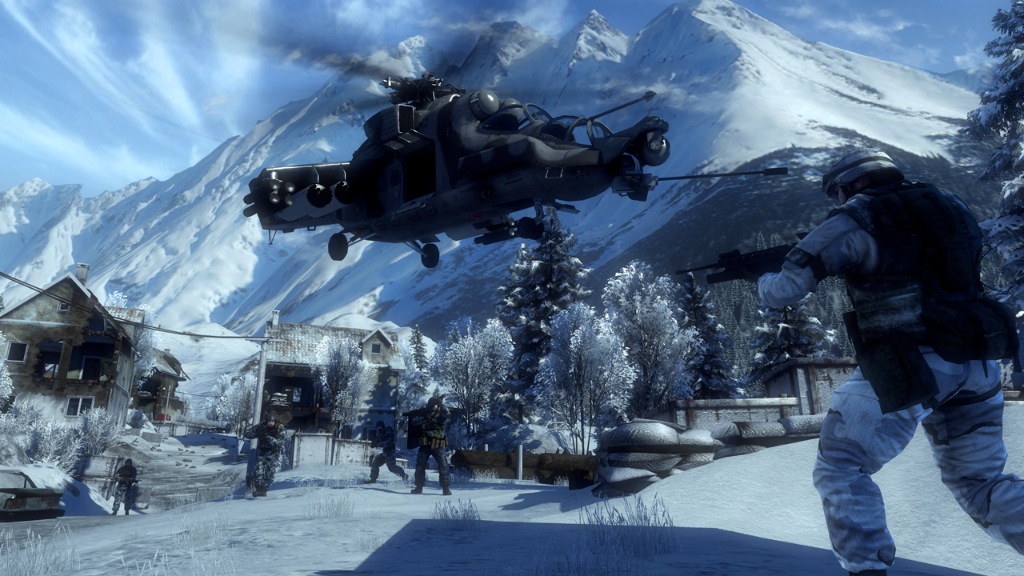
The vehicles themselves are what make the multiplayer so enjoyable. You and friends commanding the skies from a HIND helicopter or creating a Tank convoy to storm the enemy position. Not that vehicles make you invincible either, meaning a solid defence can take them down.

The lack of multiplayer modes, which are set to be increased come the next DLC instalment, don't make the game repetitive or dull at all, and you really get a sense of a prolonged skirmish even in short games because of the amount of time in the action, though if you get the timing wrong when spawning you can find yourself with a long walk to the objective.


3) Left 4 Dead 2 (Developer: Valve // Publisher: Valve)
If you prefer the dead to the living, then zombie dismember-em-up Left 4 Dead 2 is right up your street. Not only is it the most varied zombie game I've ever come across (though Dead Rising 2 is shaping up very nicely) it gives you the chance to be a zombie, and not just a trudging brain-muncher either.

The 'special' infected (the game's term for zombies) have fantastic powers, from releasing your tongue as a lasso to ensnare your victims, covering them in toxic gunge or pouncing on them from a nearby rooftop to claw up their face.

It may all sound a bit brutal, but this is a battle for survival after all, and this game like no other makes you value your life as you manically swing a cricket bat, or gnome, to defend yourself from hoards of evil nasties.

The bedrock which the first game set down has been well build upon this time around, with 'Survival' and 'Scavenge' modes adding some variety to the usual run-of-the-mill campaigns, which themselves are very varied and enjoyable in their own right. 'Realism' adds a challenge for veterans of the first game, taking away helpful pointers such as weapon highlighting and friends' outlines when out of view, making things instantly more treacherous.

Xbox LIVE is woven into the structure of this game, it would be a shadow of itself without the help of random online strangers, however tool-ish they can sometimes be.

Learning how and when to use the special infected, particularly in the short sharp bursts that 'Scavenge' offers, is even more enjoyable than tearing through the infected with your AK-47 as one of the very vulnerable survivors.

As much as it's fun to work with your friends, it's even more fun to hunt them down and devour them, with the sadistic pleasure we all feel seeing our friends in some mild peril – albeit in video game form.

This game also gets the 'Pick Up and Play' award for simplicity as Valve, with their considerable experience in first person shooters (stand up and take a well-deserved bow Half Life), have created the most intuitive control system, keeping things simple to make the learning curve as shallow as possible, and it pays off - gruesomely.


4) Red Faction: Guerilla (Developer: Violation Inc // Publisher: THQ)

Computer games give you the ability to enact your greatest and wildest fantasies from the comfort of your own sofa, and who in their right mind hasn't liked the idea of blowing up everything in sight?

Thanks to Red Faction: Guerilla that dream came one giant jet pack flying leap closer, with Violation Inc's highly impressive 'Geo-Mod 2.0', a gameplay engine which dynamically maps the destruction of buildings, allowing you to cause the roof of a building to fall crushing the building beneath it and other such havoc with the game's various structure-deleting equipment.

In multiplayer this engine takes a more significant role in gameplay as towers fall to become bridges and the building you're safely hiding inside quickly crumbles around you, forcing an energetic and varied style of play.

Game modes here are more inventive than most games too, but all containing a fair amount of destruction for good measure, naturally. The highlight is the 'Destroyer' game mood, which is pretty much as it sounds, one player tries to destroy as many buildings as possible while the rest of the team protects them, and the other team does the same. There are bonus points on offer if you kill the enemy destroyer.

It tends to work better on some maps than others, since sometimes people are too efficient and blowing things up and there is nothing left on the map by the end of the game, but it makes for some interesting matches.

Another key thing to mention is that the standard weapon is a sledgehammer, adding a satisfying twist to the standard melee attack, not to mention some amusing unlocks as you reach higher levels (ostrich-hammer anyone?)


5) Splinter Cell: Conviction (Developer: Ubisoft Montreal // Publisher: Ubisoft)

As the lone wolf of stealth action, Sam Fisher is getting on a bit, but at the risk of ruining his 'one-man-army-super-badass' image, Ubisoft decided to bring in some now acquisitions for their highly-addictive cooperative mode 'Deniable Ops'.

Players control either 'Archer' (American, cocky, sarcastic) or 'Kestrel' (Russian, cold, calculating) in missions in secret complexes, installations and generally other covert things. What makes the game mode work is the free-roaming parts, which allow you to work with your partner to navigate a large area filled with enemies by working out a strategy.

Of course you just wing it a few times, but then get separated and killed pretty quickly so decide perhaps a tactic or two wouldn't be a bad thing. As much as it sounds like a lot of thought, after a while it becomes second nature, depending on how good your partner is, and you find progressing cooperatively even more rewarding than pumping your friends full of lead.

One place where the game really favours the coop mode over the standard campaign is the much touted 'Mark And Execute' system, which allows players to highlight a certain number of enemies depending on the weapon they are using them, and then press a single button to kill them all automatically in a matter of seconds.

Because the two games are connected together there is a bit of leeway between one player pressing the button and the other, meaning you can often watch your characters executing half a dozen enemies through various walls and other obstacles, suggesting their bullets have suddenly gained wall-felling powers.

What began as feeling like a bit of a tacked-on option in the run up to the game's release flourished considerably, thanks to – or even cause of - some significant delays, and made the title overall far better value for money.


So, if you're Xbox-ing away at home on Mass Effect 2 for hours on end, blissfully unaware of the outside world, try connecting your Xbox up to the magical wonderment that is the internet and watch your games instantly become even better.


James Michael Parry

Wednesday, 28 April 2010

Gaming: Review – Splinter Cell: Conviction (Xbox360)

Stealth isn't the peak of cool it once was. Only a few years ago (well I say that, maybe a decade...) in doom-ridden blockbuster Independence Day we saw a fleet of stealth bombers tactically nuking an entire city, and who can forget the thrilling climax to James Bond's journalism-ridden (…?) flick Tomorrow Never Dies, which saw the nations favourite spy at odds with generic German #57013 Mr Stamper on a stealth boat in the South China Sea.

Now in 2010 we're in a world dominated by gritty, down-to-earth action heroes like Jason Bourne, Jack Bauer and Bond's latest incarnation played by Daniel Craig. Hard-as-nails heroes who use magazines as close combat weapons, there's only one word for that: 'bad-ass'.

So where does this leave poor old protagonist Sam Fischer and the Splinter Cell series? Other franchises, namely the Resident Evil series, have faced criticism for increasing the level of action in their games, raising fears up to Conviction's release that it would be too watered down and a far cry from the highs of Splinter Cell: Chaos Theory.

As it turns out the game has been watered down, there's no ignoring that. Recently OXM went into detail about the for and against of the “Is it dumbed down?!” argument (which you can read for yourself right here), but for my personally, I was approaching the Splinter Cell series almost fresh, having only briefly played one of the titles previously, but I found this game very easy to pick up.

Being based around the much-used 'Unreal' engine (think Unreal Tournament, Gears of War, Bioshock) gives the game a certain familiarity from the off, but it would be a mistake to think the engine is out of date because it's so often used, take Batman Arkham Asylum which astounded critics last year.

A game mechanic which was unveiled early on was that mission objectives are projected onto the background of levels, not only giving information but an indication of which way to go next. This is the first of many touches which give the game a very distinct dynamic feel, it brings you into the character and avoids to many obvious game-isms, often making it feel more like an interactive movie.

Shadows are an infiltrators best friend, making pinpointing light sources and quietly taking them out a priority, as well as knowing when you are hidden, and when you are in serious trouble. The game helps you out a lot with this, making the screen greyscale when you are in shadow, and flagging up a warning when you might be detected by guards and what direction they are seeing you from.

If the worst should happen and you are spotted, a translucent outline will appear where you were seen and so if you slip away into the nearby shadows you can ambush whoever it is who comes to investigate. The main trouble with being hidden, is that often it's too dark to see what's going on, leading you to unwittingly drag an enemy over a balcony, only to have him land on a parked car and start a car alarm blaring.

The 'Mark and Execute' (MEX) system, is a major part of this game - essentially the ability to highlight targets with a simple button press and then eliminate them without aiming, after performing a hand-to-hand takedown on an enemy. At times the system is extremely generous with line of sight, meaning you often take out enemies through walls and obstructions from sheer luck, but generally as a mechanic it means that taking down a room-full of enemies doesn't mean weeding them down, one-by-one.

The game tends to play into your hands, leaving a lone enemy slightly ahead of the rest to give you that all important MEX opportunity. This emphasis on direct assault does tend to take away from the merits of the arsenal of gadgets at Sam's disposal.

Aside from standard frag grenades, which are more than capable of taking out half a dozen tightly-packed enemies at once, there are EMP grenades too, which make short work of any lights and electronics in the area, giving you time to escape, or strike.

The more unusual of gadgets include sticky cameras, which can be attached to surfaces and remotely controlled to distract guards – or even detonated to silence them – but sadly can't be retrieved again afterwards.

One of the most commonly used gadgets is the snake cam, allowing you to sneakily peek under doors, unless you can't get the camera angle right and the floating in-game actions force you to open the door of course.

The story itself would probably mean more to a seasoned Splinter Cell player, but from what I could work out it seemed much like any given series of 24, a missing daughter, terrorists, threats to the president etc.

The few missions which mix up the relentless killing work well. The occasional flashback sequences aren't as effective as those in Batman: AA, but the war mission - a strong nod to the Modern Warfare generation – is too early on before the momentum of the story gets going, making it an abrupt change instead of a welcome break after an intense mission.

Multiplayer pushes this game to the top, the cooperative prequel missions in particular are a triumph in two-player constructive, strategic play, often forcing players to work together to get every move precisely right in order for them to move forward, and, if my own playtime is anything to go by, make up the shorter main story time for Splinter Cell veterans.


Verdict: An excellent entrance to the series for those with their wits about them, while it may not be what fans had hoped for, it's quirks make it a definite progression for the series and there is still plenty of opportunity for clever stealth moves amid the flurry of bullets.


Rating
: 4/5


James Michael Parry

Wednesday, 27 January 2010

Gaming: Mass Effect - The essential catch-up guide

For those of you out there who are of the Xbox 360 persuasion, you may have heard about a little sequel called Mass Effect 2 – due to hit stores in Europe on Friday 29.

“But I've never heard of 'Mass Effect'?!?” I hear you cry. Well, I hope to try and explain what it's all about to those of you who are new to the Xbox family, or just those who the first game passed by, clued up on this tremendous and potentially genre defining sci-fi franchise.

So, what on Earth is 'Mass Effect'?

Mass Effect is an Xbox 360 game released in 2007 (though it also got a PC release in 2008). The game sees you control Commander Shepard, a soldier in the Alliance, through the tense narrative of a space opera, which sees you uncover the truth behind an ancient evil threatening the galaxy and defeat it. Imagine playing your way through a mixture of Aliens, Star Wars and The Wrath of Kahn and you're half-way there.

Why's it called 'Mass Effect' then?

'Mass relays' are technology supposedly left behind by an ancient race which became extinct over 50,000 years ago called the Protheans. The relays allow spacecraft to travel across the galaxy over great distances in a short space of time, in a similar way that Warp and Hyperdrive work in Star Trek and Star Wars. The Citidel is the hub of the relay network, and since the technology was discovered the galaxy has been connected through it, allowing countless races to come together to meet, trade and share their own technologies and knowledge.

So you control this guy?

When you first start a new game you must create your character. Like many RPGs (role-playing game), you are offered the choice of a male or female character and an array of different classes which affect how you play the game. The in-game universe contains three main skill-sets – Combat, Biotics and Tech - which each class has varying degrees of. Combat is the skills of a traditional soldier, if you fancy the 'all guns blazing' approach then this is the skill-set to focus on. Biotics are a strange psychic-like force which allows you to levitate enemies in the air, throw them or otherwise immobilise them, meaning fans of spell-casting classes in other games will feel most at home here. Tech is, as the name suggests, focused on technology and levelling the battlefield in more of a supporting role than an out-and-out fight, making the players who use this ability more team-focused in combat, allowing your allies to get the kills while you weaken or hack the enemy troops.

So...why does how you play the game matter?

When talking to other characters, interactive dialogue options allow you to choose what Shepard says next, meaning you can change the way you respond to certain characters or react to situations in the story as they unfold. You can be as chivalrous or as dastardly as you fancy, turning your character into a 'just' hero or a hard-ass soldier as you level up and gain skill points to spend beefing up your character's abilities and attributes. If you are nice to characters you meet in the game, they will often help you, or pay you to carry out certain missions, but if you aren't you may have to fight your way to your goals, or knock down whoever is in your way rather than talk your way past them.

What is the point of the game?

At the opening of the game, a lone human colony on Eden Prime has discovered a mysterious artefact, your first mission is to go there and uncover what is going on. It soon transpires that the colony is under attack from an race of enemy machines called the Geth, under the command of a renegade Spectre agent: Seren. As the plot thickens, you must stop Seren from unleashing an even greater enemy and wiping out life in the galaxy.

'SPECTRE', isn't that a James Bond thing?

Spectre stands for: SPECial Tactics and REconnaissance, an elite fighting group working directly under the Alliance council as their right hand their “first and last line of defence” and have access to unique weapons and equipment to get the job done, like a sort of inter-stellar SAS.

Didn't I hear something about getting cosy with an alien?!

There are countless sub-plots in the game and one of the most controversial of these is the 'romantic' sub-plot. As Shepard you can attempt to woo some of your fellow adventurers between missions as the main plot progresses, leading to the inevitable just before you visit the final planet of the game – providing you're particularly charming and romantic, obviously.

So what makes 'Mass Effect' worth playing?

For all those people who say computer games are nothing more than blinking lights and killing people, this game takes a chance on giving players a decent story to follow, and it pays off. Despite faithfully holding on to the traditions of the sci-fi of yore, the story is put across in a very sheek and modern style, and the interactive nature of the narrative means that the game can have several different endings depending on the choices the player makes during the game. On top of that the characters are full and realistic, with some very talented voice-actors lending their voices to the game, including Keith David as Captain Anderson, who has been heard lately in gaming blockbuster Call of Duty: Modern Warfare 2 as Sergeant Foley.

And what about 'Mass Effect 2'?

There are some problems with the first 'Mass Effect', but the game's developers BioWare have gone to great lengths to ensure these issues are addressed, and improved upon significantly in the sequel. The feel of the new game is much quicker, with the combat being easier to navigate and the visual detail of the game being greatly stepped-up. The most exciting feature of ME2 is the fact that the decisions you make in ME1 carry over to the next game if you continue your save. Something this ambitious has never been tried before, since the choices players have made can mean some characters will be either alive or dead in the second game. Side quests and plot points which seemed insignificant in the first game may prove to be important in ME2, creating a very different and individual game. BioWare always intended the games to pan out as a trilogy, meaning the stark contrast between different games is set to get even wider when Mass Effect 3 is released.


So, hopefully that has answered some questions. For those of you who are yet to play either game I would strongly recommend playing through the first one first, since the entire second game will be far more enjoyable once you know the characters, though if you do want to skip ahead you can start a new game in Mass Effect 2 with a 'standardised' storyline. But the beauty of this game is in the amount of detail put into it, from the moment you set foot in The Citadel for the first time, you get an epic sense of scale at what BioWare have created with this expansive universe. Even if you can only just stand science fiction, I would highly recommend buying this game. Since you can now pick it up for not much over a tenner, what have you got to lose?


James Michael Parry

Sunday, 29 November 2009

Review: Left 4 Dead 2 (Xbox 360)


New survivor Rochelle is attacked by a Jockey, complete with The Joker-style manic laughter, while Ellis minds his own business (pic: GP)


Everybody loves killing zombies. Something about fighting off the hordes of the undead gives a certain satisfaction you just don't get from killing Minion #367 or slaying a mythical beast. Perhaps it's because we relate to the characters in games like Left 4 Dead – the whole world has gone to pot so they are forced to kill everything in sight as a last resort, a final act of desperation, for survival.


Valve's original zombie-shooter raised the bar in terms of what can be achieved in the genre, and they were rewarded with countless Game of the Year Awards. The game's intro movie entranced the imagination of players as they watched a Hunter, the hoody-wearing 'special' infected, pounce across a road to attack Lewis thinking “I hope I can do that”.

Sure enough the team didn't disappoint and the multiplayer aspect in particular demonstrated a whole new level of cooperative gaming, clocking thousands of hours of play time on Xbox LIVE.

With the sequel then, the bar was set rather high. Luckily there were issues with the original which needed to be addressed, and Valve tackled these in spades, countering complaints about the lack of campaigns playable in Versus mode by making all five stories playable this time around.

On top of the new levels there are new special infected to play around with: the Charger, a Tank-esque figure who can knock down an entire team like bowling pins and pummel one unlucky survivor to the floor, the Jockey, who piggy-backs survivors and drags them away from the team, leaving them open to attack, and the Spitter, who produces a highly toxic acid from it's mouth which can cripple a team in seconds.

Choosing not to continue the story (actually you're right, what story?!) from the original L4D by changing the setting to the southern states of America, the new survivors – Nick, Ellis, Rochelle and Coach – begin their story in Georgia, not even knowing each others names and attempt to find their way to New Orleans in hope of rescue by the military.

On top of the standard campaign, which is more amusing (and frustrating) online, and versus mode, the game also offers 'Realism', 'Survival' and 'Scavenge'. 'Realism' is for the seasoned L4D player, taking away all the pop up hints like “Don't shoot team mates!” and not highlighting weapons, items or off-screen players, making the special infected all the more deadly.

'Survival' is similar to the free add on for the first game, which sets up the four survivors in various locations from the campaigns and challenges players to stay alive for as long as possible, with as much petrol and pipe-bombs as you can throw.

'Scavenge' sees you collecting fuel to power light generators or getaway vehicles and works much in the same way as 'Survival' except there are rounds, with both teams getting to play as the special infected and the survivors, forcing players to exploit the new specials abilities, such as using the Spitter to cover the fuel pouring area in acid, or splitting up the survivors by driving one away with the Jockey.

The biggest change is the weaponry. If you ever wanted to swipe off the head of a zombie with a cricket bat (á la Sean of the Dead) you can thanks to the shiny melee weapons. Totalling eight in all, the list is topped by the deadly chainsaw, which can plough through dozens of gruesome infected before it runs out of juice.

The array of main weapons available has also been boosted, now letting you deal death with an array of FPS classics such as the AK-47 or Desert Eagle, but the jewel in the crown is the grenade launcher. Ridiculously powerful, but painfully slow to reload, the launcher sends body parts flying with precision and can quickly dispatch the fearsome Tank.

As if that wasn't enough, incendiary and explosive ammo are now available, good for one clip per gun when activated. The explosive ammo is a little lack-lustre, merely causing rounds to occasionally clip infected standing nearby. The power of fire on the other hand is devastating, creating one-hit-kills and lighting up the horde like a Christmas tree, well...maybe a pyromaniacs Birthday party...

The campaigns are as fresh and engaging as their predecessors were first time around, and the implementation of weather and other environmental effects is particularly well done. In 'Dead Center' you have to escape the building while it's burning down around you, with flames and smoke everywhere making it difficult to see and almost impossible to find the way out. This is taken even further in 'Hard Rain' where the second half of the level sees you re-tracing your steps while a storm rages slowing movement and covering the sounds of the infected's approach, creating a tense and genuinely terrifying experience.

Online, this game is a triumph and promises countless hilarious and irritating moments, often at the same time. It doesn't re-invent the genre or poke at the boundaries like Modern Warfare 2, but Valve have lived up to their pedigree and provided a sequel that surpasses the original Without Xbox LIVE though, there wouldn't be much of a game, so if you're online play-challenged then give this a miss, for anyone else who owns an Xbox though it's a crucial purchase. Lock and load.

James Michael Parry

Saturday, 24 October 2009

Xbox LIVE Update: Social gaming revolution or shameless franchise spamming?

The modern world is all about sharing. Whether it's your best friend uploading those potentially career-damaging drunken photos of you to Facebook or your brother ranting about the state of the economy on Twitter, everything has something they want to say.

Microsoft's latest addition to the already jam-packed NXE (New Xbox Experience) will bring these household names direct to your Xbox, along with the likes of Zune, a video downloading service, and Last.fm, the sophisticated Spotify, which lets you stream music direct from the internet.

The icing on the cake for sports fans is the Sky player, which will allow you to subscribe to Sky packages through your Xbox and enjoy the latest football match with all your friends' avatars from around the world.

While it may all sound exciting in theory – in fact the round of applause from E3 has only just died down - it only goes further to hammer home the stereotype of the near-institutionalised computer games fan, hiding away from the world in a dark room out of touch with the real world.

Of course this is nonsense in this day and age. Gaming is more diverse than ever before, with the average UK gamer aged around 28 years old and over 59% (26.5m) of all 6-65 year-olds playing computer games, in no small part due to the user-friendly nature of the Wii.

Microsoft's vision is to fight back by turning the Xbox 360 into a multimedia super entertainment centre. The vision falls short in reality though as the update itself (after a lengthy download) doesn't 'wow' right away, just causes Facebook and the like to feature in the dashboard menus, prompting another download each time one of the applications is selected.

Sadly the lack of integration doesn't end there, with each application being treated almost as a separate game rather than part of the dashboard, meaning you can't have any part of Facebook or Twitter running in the background, so if you wanted to share with the world that you'd just nailed the 'Seriously 2.0' achievement on Gears of War 2 you'd have to exit out of the game.

Teaming up your happy-go-lucky avatar with your real self is a little unnerving at first as well, but once the update is released worldwide you'll be able to add friends to Facebook from Xbox LIVE and vice versa, as well as all the usual Facebook features such as viewing photos and spying on your enemies from your primary school days.

Being keyboard-less on the 360 is one major drawback for the text-heavy knitting circle Twitter and though you can splash out on a 'Messenger Kit', you might find it easier to dig out the laptop to tweet away than navigate through the swarm of menus to share your thoughts through Xbox LIVE.

For music fans Last.fm offers a colossal range of music from almost any artist imaginable, though you need to pay to sign up to the premium version of the service to unlock the most useful content, such as the ability to play just your 'loved' tracks, making endless CD burning for summer BBQs a thing of the past.

Zune, the least well known of the new additions, jazzes up the already popular Video Marketplace to offer a wider choice of films, though the choice is currently fairly limited. As well as feature films, Zune also highlights the best bits and bobs from the web to keep you entertained when you fancy a break from failing to beat 'Scatterbrain' on Expert for the 18th time.

Sky Player is the most illusive inclusion to date, with Xbox LIVE's message stating it will be rolled out on October 27 and that users won't need a Sky dish to access content. What it does reveal is that there will be plenty of on-demand movies available, possibly creating a bit of competition between Sky and Zune to control the download rental market.

The features are determined to show of their usefulness to gamers but for those without a lightning-fast internet connection even updating Twitter can be a strain, making the prospect of downloading a feature length full 1080p HD film a daunting prospect, though luckily you don't need to wait for the download to finish before you start watching.

There's masses of potential here, and now Microsoft has these big companies on board things will only become more refined and sleek but at the moment all the new features seem very tacked-on, giving more of a sense of bewilderment than appreciation of a revolutionised multimedia interface.

--- James Michael Parry

Monday, 8 June 2009

This Is Entertainment's comprehensive E3 Summary: Part 3 - Microsoft

Here it is then, the one you've all been waiting for, at least I hope so! After watching Microsoft's mammoth E3 press conference in full I'm going to digest that down as much as I can to get you all clued up on the latest and greatest information.

You may have heard a few things blowing around on the internet, so first let's answer a few quick questions:

- What do you mean there's going to be Metal Gear Solid on Xbox 360?!
- Well the creator of MGS announced the next title: Metal Gear Solid - Rising, will be coming to 360, but there's little chance MGS4 will make it over as well, sorry about that! Don't rule out MGS1 on Xbox Live Arcade though...

- I hear Microsoft is partnering up with enough different companies to be declared serial bigamist of the year?
- That's right, well, the partnering part at least, not sure what you're going on about...MS announced partnerships with Facebook, Twitter, Sky, Last.fm AND Netflix. (more on some of these later on)

- So Xbox is trying to be some sort of all-in-one box of entertainment then really?
- That's the idea. They're pushing all possible avenues to bring gamers full 1080p HD video with instant streaming, music, social networks, everything you could possibly want bar going and getting you another beer from the fridge basically.

- Halo Reach? ODST? WHAT IS GOING ON?!
- Calm down! Yes there are now officially two Halo games in the works over at Bungie. Halo 3: ODST (Orbital Drop Shock Trooper) is an add-on to Halo 3 which will include 3 Halo 3 multiplayer maps and a 10+ hours campaign focusing on the ODST troops around New Mombasa, set between Halo 2 and Halo 3. Halo Reach is a "top" secret Halo project Bungie have been working on. My reliable sources tell me that from the name it would suggest it has something to do with the first Halo ring over Reach, which was destroyed in the first game and was a pivotal moment in the war. Not much official info on it exists just yet, but it's due out late 2010, for now, just check out the teaser trailer: http://www.youtube.com/watch?v=MqIEvH7sGQ0

- What on EARTH is this Project Natal thing?
- That's a very interesting question. In a nutshell it's some fancy new technology which lets YOU be the controller, including facial and voice recognition and full motion capture without the need for any strange suits or anything. It's essentially MS' answer to the Wii's motion capture, but done in true MS style...they had to go one better. If it really works like it claims to then it genuinely a big step forward in potential for MS, but the videos seem a little contrived to be convincing, take a look for yourself: http://www.youtube.com/watch?v=oACt9R9z37U

Also, you can check out a blog post on Natal from a good friend of mine, Andy Hemphill: http://tinyurl.com/ndz9m7

Now, I think it's time we had a look at what's the most important thing about a games console, aside from the fancy deals and new technology, which is its games.

The first game to take the floor was Tony Hawk Ride, which uses a skateboard controller to track the gamers motion and movements on the sk
ateboard, and let them have more control than the plethora of Tony Hawk titles of years gone by. The man himself was there to show it off, just the first of MS' star guests of E3, but despite the 'bigging up' it still could be an excellent and innovative game.

Next up was a biggie: Modern Warfare 2. So major it made the cover of the latest OXM, the game is the sequel to the phenomenally successful Game of the Year that was Call of Duty 4: Modern Warfare. The trailer, which you really should have seen by now (but here it is if not), was impressive enough, but the gameplay shown was the most interesting element. It sees a new recruit, codename 'Roach', following COD4 hero 'Soap' McTavish in a snowy blizzard through which the player must claim an icy rock face to the next encounter. The weather plays a massive part, marking the shift between stealth, as you sneak around stealthily before the blizzard clears and colossal frantic fire-fight takes place. The game looks outstanding and the single player was a personal high point so it's good to see that Infinity Ward haven't relied on the predecessors ridiculous success on Live.

Joyride, a FREE XBLA game, will be the first racing title to use your avatars for some funky Mario Kart-esque action. The game certainly gives a decent platform for UGC, and while you do have to pay to get the best tracks and cars, only one of you're friends has to have bought them to play them with you, which is a neat idea.

Teaser trailers for Crackdown 2, Left 4 Dead 2 and Splinter Cell: Conviction mark the emphasis of MS' focus on 'Only on Xbox' titles this E3, and admittedly come of impressively for it. Conviction in particular looks to break free a little from the traditional Splinter Cell format, as Fischer takes off his tri-goggles and dons a distinctly Bruce-Willis-in-Die-Hard attitude as he tries to find out who killed his daughter. A couple of slick design features make this release stand out, namely super-imposing credits and objectives on the landscape of the levels, immersing you in the world while keeping the real-time narrative going, and a refreshingly tasteful use of slow-mo.

Not to be left out, Epic Games, the kings of Gears of War, demoed their old-school 2.5D side-scrolling platformer, which showed a nice level of depth, ironically, for the genre through Xbox Live Arcade.

Halo was always going to get some hype, and the play-through of ODST delivered everything fans of the series have been waiting for, complete with ill-fated TV show Firefly voice actors, which is always a plus.

Natal proved to top off what was near to being a continuous round of applause for most of the press briefing, but where can I hear all this news for myself I hear you ask? Just head over to Gamespot to check out their full press conference video, but be sure you have two hours to kill!

The year looks set to be a good one, and if MS delivers on what it has promised then it will certainly give Nintendo some sales figures to contend with by the time the Christmas spending spree begins.

Friday, 15 May 2009

Xbox LIVE: The Past, the Present and the Future

Online gaming is no longer just a novelty, it's a phenomenon, and in the console world if there's one platform that shines brighter than all others it's Microsoft's Xbox Live.

The service launched back in 2002 and had amassed 10 million users by February last year, but will its 'golden age' last? What makes it so successful? Where will Live go from here?

It's difficult to work out exactly how many people log on, since Microsoft keeps such information pretty close to the chest, but since it reported a rise from eight to 10 million users in only a few months, it's clear there’s potential for further success.

But what about the other side? There have been hacking issues, deleted accounts, glitches and cheaters who upset the online status quo for their own personal gains.

Totally360.com spoke to Gary Shaw, the Managing Director of unofficial troubleshooting site Xbox Live the Guide, who believes cheating is a serious issue:

“Cheating has been around since games were invented and it will never go away. I’m firmly from the ‘you’re only cheating yourself’ camp. If it’s not a genuine win when playing PES [Pro Evolution Soccer] or ‘winning’ COD [Call of Duty] with a rapid-fire mod... well... have you really won anything?”

The effect of cheating is that is creates more cheaters, since more people exploit the glitches in games that they see others doing. Colin Miller, a professional Games Journalist, believes that if cheating is allowed to continue it can cause other issues: “The main problem is that it leads to more ‘rage quitting’. I have quit quite a few games of COD: World at War myself after seeing cheaters shooting other players whilst hovering in thin air. It's annoying for players when you spend all that time waiting to join a decent match and then that happens.”

The introduction of the ‘New Xbox Experience’, or NXE, in November last year led to an increased focus on the social side of gaming, allowing gamers to form ‘parties’ and jump from game to game together.

These benefits were generally well-received, with some even going as far as saying it felt like playing a brand new console, but according to Helene Wilson, EMEA Xbox MVP and webmistress of Xboxliveaddicts.co.uk, there is a down side to relying on ‘party’ based gaming:

“Although [it’s] great to have it so we can chat whilst all playing different games and from wherever we are, it’s taking away to a certain extent the ability to make new friends. If you are in a Party Chat and someone comes into a lobby, how are you meant to hear them?

“It's a great feature for people who love to be in a small group, but not so good for new people to Xbox Live who may be looking to make friends.”

Despite this, Xbox Live remains significantly more developed than it’s equivalents on other consoles. The Playstation 3’s ‘Playstation Network’ (PSN) recently announced over 20million members, a significant amount in the two and a half years it’s been up and running.

The key difference between their successes is money. A silver subscription to Xbox Live is free to Xbox owners, but it requires a monthly fee of £4.99 in order to upgrade to a gold membership and access its best features, particularly multiplayer, while Sony’s PSN remains entirely free.

Talking to Edge magazine about the financial worth of Live in 2007, Aaron Greenberg, the group product manager for Xbox and Xbox Live, said “You’re creating your friends list, messaging…. instant messaging, you get a good 80% of the Live experience for free…we feel our multiplayer offering is good value at 50 bucks (£39.99) a year.”

The content of Xbox Live isn’t just limited to games though. Video on demand and other digital distribution has been increasingly utilised in the past year, with film studio Pathé being the latest to sign up only a few weeks ago. The studio, responsible for Oscar triumph Slumdog Millionaire, joins Universal Studios, MGM and Paramount, who are all already providing films for Live.

Video downloads still have some way to go to reach the popularity of DVDs, which had sold over a billion units in the UK by 2007, but Shaw believes attitudes differ between America and Europe: “I think if you live in the states it’s been great. Outside of the US though seems to have been forgotten about. Sure we’ve got a line up of movies but it’s not to the same extent as our cousins over the pond.”

Another major part of the success of Xbox Live is downloadable content (DLC) for games. Almost every week there are reports of download records being broken, the latest being for Xbox exclusive downloadable episode 'The Lost and the Damned' for Grand Theft Auto IV, which became the fastest opening day money-maker on Live, retailing at 1600 Microsoft points (around £14).

There have been numerous controversies and problems with DLC in the past, such as the infamous horse armour for Oblivion, which caused an uproar on release when developer Bethesda charged 200 Microsoft points (about £1) for something which most gamers agreed would have been an unlockable secret in days gone by.

This begs the question of what qualifies as ‘good’ downloadable content, just as ‘The Lost and the Damned’ made us wonder if there should be a limit on how much developers can charge for DLC.

Andrew Hemphill, a Freelance Entertainment Journalist and Sub Editor, believes the quality of DLC can often depend on the individual game: “It’s a very mixed bag, while some of it is priced correctly, there are far too many developers placing a massive tag on their DLC- I shouldn't have to pay £10 to download three maps for COD 4 for example- that's extortionate. It should be capped.”

Some would like to see DLC pushed even further though, Wilson said: “I would like to see in the future all games being downloadable to the hard drive or to some kind of server for consoles, the way they do for P.C. Not only does this eradicate the stack of boxes and reduce the need for storage, but it would also get rid of scratched discs and be much easier to find the game you are wanting to play.”

Another issue which had left the gaming community throwing their pads across the room is ‘pay-to-unlock’ content. This is content which is included on the retail disc and is merely unlocked by paying the Microsoft points.

A chief example of this comes from EA games who publish both Burnout Paradise and Skate 2, both of which have downloadable codes to unlock all the secrets in the game. For some gamers this has already started alarm bells ringing, since players are being offered a choice to pay for little more than a cheat code.

Recently action horror hit Resident Evil 5 released its Versus mode amid a wave of allegations due to the download’s filesize being a meagre 1.5megabytes (about half a song’s worth of music), since it was widely claimed the content was already on the disc. Capcom responded stating that the structure of the mode wasn’t on disc already, but brought together content from all over the disc and bundled it up with only a bit of new code.

The fact of the matter is that Xbox Live works, and with new releases on the horizon, both retail and DLC, there’s plenty of scope for the service to increase in popularity, but what else will change?

Miller believes Live will embrace the social element: “with the fact you can access your account from any computer, I wouldn't be surprised if it becomes a bit more of a social network, like a gaming version of facebook.”

Hemphill sees it taking advantage of advances in web technology: “As high-speed internet connections become more popular, I can see an expansion in video and game downloads being forthcoming and possibly entire games being downloadable over the service.”

Wilson envisions a virtual world in your living room: “Touch, speech and movement sensitive controls and I would like to see an Xbox Live radio, web browser and perhaps a place to see how many lobbies are open on a game without having to put your disc in.”

Shaw thinks of the economics of the service: “People ask why Xbox Live isn’t free. I think it would ruin the service. It needs money to make sure it evolves. Although I’m sure it wouldn’t hurt to reduce the subscription price a bit or at least offer some sort of discount for gamer families who have to fork out a gold subscription for every child/parent in the house.”

The future economic and global success of Live will depend on the continued communication with its members and responding to their requests for their service, since without them, Live could not exist.

This piece can also be seen on Totally360.com here.